In a impressively short time: SMA brings EVerest to the SMA eCharger for AFIR 2027
SMA is integrating the EVerest stack into the SMA eCharger, a wallbox with more than 20,000 units in the field since 2024. The goal: ISO 15118-20 and OCPP 2.x before AFIR's January 2027 date, and charging plans built on what the car reports.

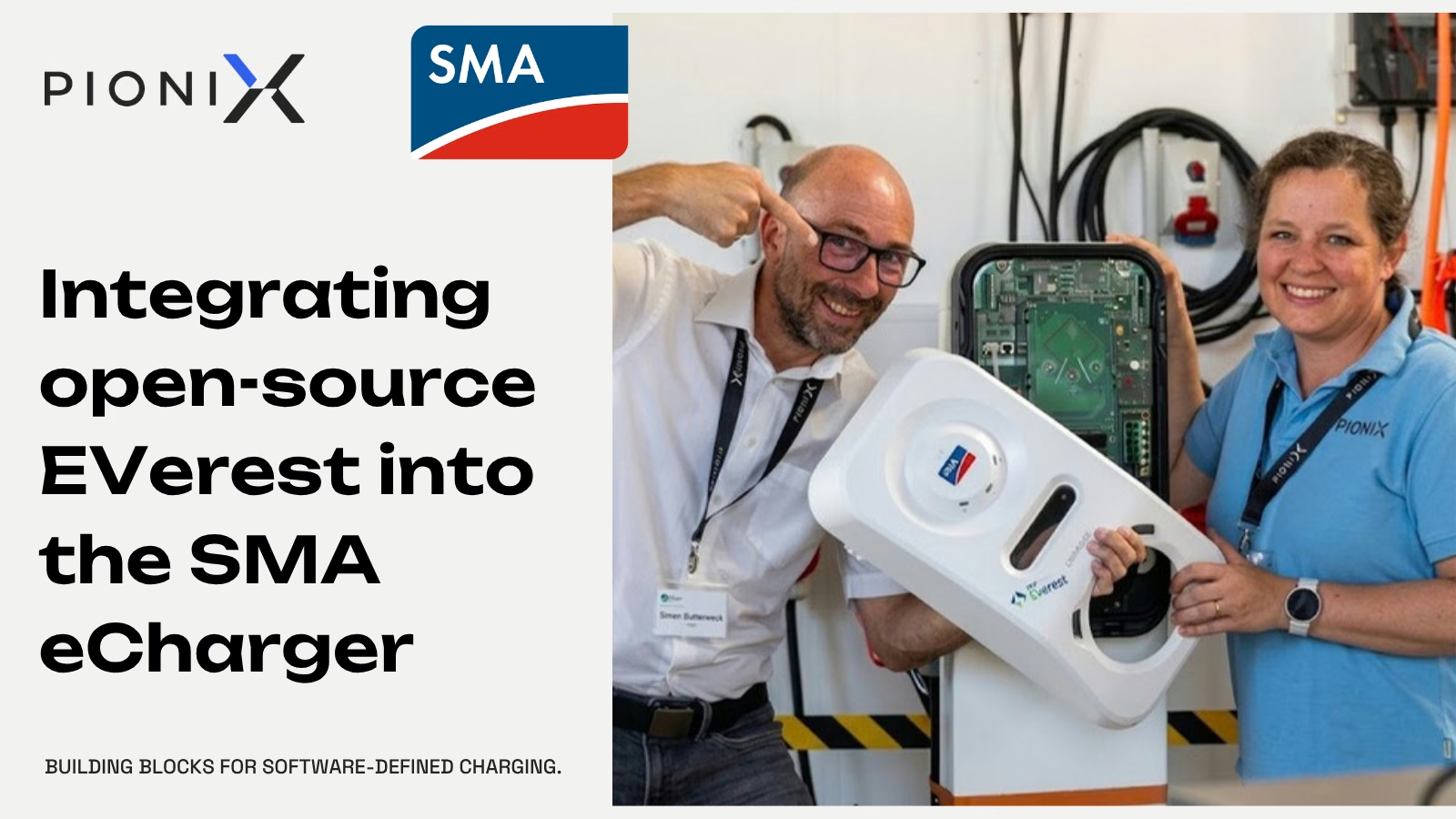
At THE EV:ent on September 8, 2026, Simon Butterweck and Aaron Sude of SMA Solar Technology showed a room of charger makers a project many of them have on their own desks: bringing a shipping product up to ISO 15118-20 before January 2027. SMA's answer is LF Energy EVerest. The open source stack is going onto the Linux module of the SMA eCharger, a 22 kW AC wallbox with PV surplus charging that has been in the field since August 2024 and, by SMA's count, has passed 20,000 units.
The deadline is the reason, the installed base is the constraint
AFIR, the EU regulation on alternative fuels infrastructure, requires charging points installed or renovated from January 1, 2027 to support ISO 15118-20. Since Delegated Regulation (EU) 2025/656, the rule covers publicly accessible points and private Mode 3 points alike, which puts a home wallbox squarely in scope. SMA's product FAQ says it plainly: the eCharger gets ISO 15118-20 through a firmware update planned for the end of 2026, for new and existing devices.
Today the eCharger speaks ISO 15118-2 and OCPP 1.6j on SMA's own software. ISO 15118-20 and OCPP 2.x were missing. Writing both from scratch for a product that already sits in 20,000 homes is the risk SMA's second slide names: how to meet AFIR in 2027 with low risk.
EVerest goes on the Linux module, the rest of the eCharger stays as it is
SMA calls the eCharger a system controller, and two modules show why. A real-time vehicle control module drives the control pilot and the powerline link and runs the AC powertrain: grid relays, phase switching, high-precision energy measurement, overvoltage protection. The second, a communication module, runs Linux and ennexOS, SMA's energy management operating system, which also controls the PV system and the grid connection.
In the 2027 setup, EVerest runs on that Linux module and supplies ISO 15118-2 and ISO 15118-20 as well as OCPP 1.6j and OCPP 2.x. A translation module connects the stack to SMA's real-time vehicle control, so the powertrain and its safety functions remain SMA's own code, and SMA lists bidirectional readiness in the same setup. That division of labor is what we mean by software-defined charging: the standards live in the stack and arrive by update, and the manufacturer keeps what makes its product its own.
The car tells the energy manager what it needs
The second half of the talk was about what the vehicle data does for the customer. SMA calls this step from guessing to knowing. Today, a solar owner who wants the car ready at 07:00 has to know the battery size and guess how much room is left in it before every session. Guess low and PV surplus goes unused. Guess high and the eCharger buys grid power in expensive hours. A state-of-charge limit set in the carmaker's app can end the session early without the energy manager noticing.
With EVerest and an ISO 15118-20 vehicle, the car reports its state of charge during AC charging, which ISO 15118-2 only provides for DC. The customer sets a target once, "charge my car to 80 percent by 07:00", and never types a kilowatt-hour figure again. SMA's cloud, which already picks the cheapest charging windows from price, PV and load forecasts, gets the free battery capacity as a fact instead of an estimate. Tracking state of charge over time lets SMA build per-customer efficiency curves, lose less PV generation and buy less grid power.
In their words
“From our very first conversation to bringing EVerest integration to life in an impressively short time, working with Pionix has been a fantastic journey. Two passionate teams, one shared goal and great teamwork all the way. A big thank you to the Pionix team for the trust, openness and energy you’ve brought to this collaboration!” Simon Butterweck, Technical Manager Charging Infrastructure at SMA.
"The eCharger shows what we built EVerest for. A manufacturer with a mature Linux platform and a shipping product takes the stack, keeps its own real-time code and energy management, and gets ISO 15118-20 and OCPP 2.x without starting over. What we like most is the second half of SMA's story: once the car says what it needs, an open stack turns a wallbox into a better energy manager," says Dr. Marco Möller, CEO of Pionix.
Validation and a field test come before the rollout at the end of 2026
SMA's plan runs through system validation and a field test before the firmware rollout, which the company's product page dates to the end of 2026 for new and existing eChargers. At THE EV:ent, Simon Butterweck also joined the EVerest adopter panel alongside Compleo, Pluon, Zaptec, Qwello and evonity; recording and slides of the talk are on the-event.tech.
If you build chargers on a Linux controller and have the same date in your calendar, our EVerest and AFIR page lists what the stack covers on the charger side today, from ISO 15118-20 to payment and data obligations.